How Munshiganj can protect its riverbanks along the Padma
The deadline for the Padma bank protection work from Louhajang to Tongibari arrived in September 2026. Finishing it, stopping illegal sand lifting and supporting displaced families must now come first.
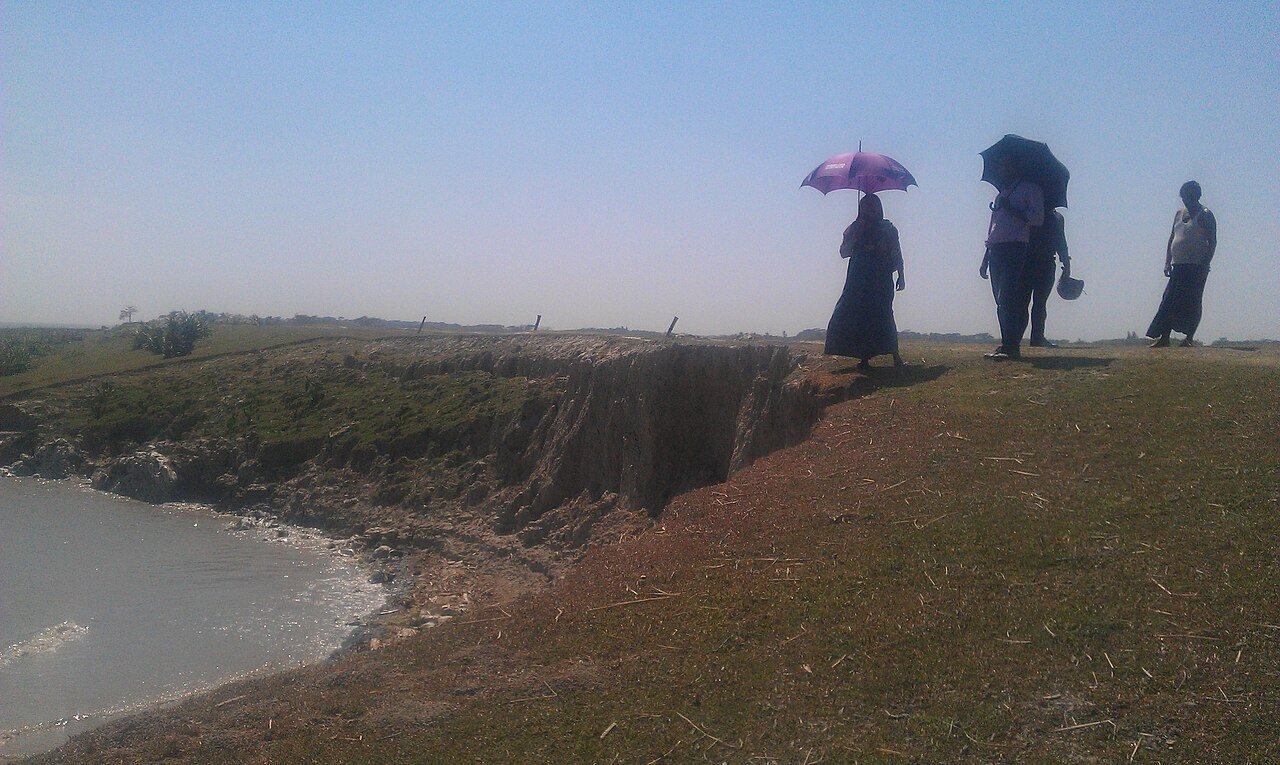
Every monsoon, families along the Padma in Louhajang and Tongibari watch the river with the same question: will the bank in front of the house hold this year? Too often the answer has been no. Homes, farmland, schools and market stalls have slipped into the water, and with them the savings of generations.
Munshiganj is a river district. Fourteen rivers with a combined length of about 155 kilometres pass through it, among them the Padma, the Meghna, the Dhaleshwari and the Ichamati. These rivers built the land of Bikrampur and fed its people. But the Padma is one of the most restless large rivers in the world, and its left bank downstream of the Padma Bridge has been under steady attack for years.
A project that must be finished
In 2021 the Bangladesh Water Development Board began a bank protection project on the stretch from Shimulia in Louhajang to Dighirpar in Tongibari, a length of more than 15 kilometres. Its budget has been revised upward to more than Tk 500 crore, and its completion date was moved to September 2026. That date has now arrived. The people of Dighirpar, Louhajang and the villages between them have a right to know how much of the work is complete and how much of the bank is still exposed.
We do not doubt that the engineering is hard. The banks of the Padma are made of fine sand and silt that give way quickly when the current turns. Delays in river works are common. But every delay has a cost, and it is paid by families who cannot move their land out of the river's path.
Protection is more than concrete blocks
Hard protection is only part of the answer. Uncontrolled sand extraction from the riverbed can change the flow and speed up erosion. Weak monitoring allows geo-bags and blocks to shift or sink without anyone noticing until the next collapse. And when land is lost, families often wait years for help to rebuild, while land that later reappears as char can become the subject of long disputes.
The people of Bikrampur at home and abroad also have a part to play. Diaspora associations raise money every year for flood and erosion relief. That help is welcome, but it would go further if it were planned in advance with local government and aimed at resettlement, raised plinth housing and schooling for displaced children, not only emergency food after a collapse.
What we suggest
- Publish progress. The Water Development Board's Munshiganj office should post a plain public update showing which sections are finished, which are under way and which remain unprotected, before the next monsoon.
- Stop illegal sand lifting. The district administration and the river police should enforce the Balumahal and Soil Management Act along the protected reach, with a hotline for residents to report dredgers working at night.
- Maintain what is built. A yearly maintenance budget and a post-monsoon inspection should be part of the work, not an afterthought.
- Prepare families early. Union parishads should keep an up-to-date list of households in the high-risk belt so that relief, rehabilitation and khas land allocation reach them quickly.
- Coordinate diaspora giving. Bikrampur associations abroad could pool funds into a single erosion resilience fund, run with local partners and audited every year.
The Padma gave Bikrampur its fertile soil, its trade and much of its identity. Living with the river is not a choice. But losing ground year after year is not inevitable either. Finishing the work, protecting it and caring for those who have already lost their homes should be a shared priority for every institution in Munshiganj.
Sources
More stories


